


The feening meaning is an intense craving, desire, or strong urge for something. In everyday slang, someone may say they are “feening” for food, coffee, attention, music, or a person. In a more serious addiction-related context, feening can describe strong cravings for drugs, alcohol, nicotine, or another substance.
For example:
- “I’m feening for pizza” means “I really want pizza.”
- “He is feening for attention” means “He strongly wants attention.”
- “She is feening for alcohol” may suggest a serious craving or possible dependence.
The meaning depends on context. Sometimes it is casual slang. Other times, it can point to a real struggle with cravings or substance use.
Table of Contents
What Does Feening Mean in Slang?
In slang, “feening” means wanting something badly. People often use it when a normal desire feels stronger than usual.
The feening meaning in casual speech is close to:
- Craving
- Wanting badly
- Obsessing over something
- Feeling desperate for something
- Having a strong urge
Someone might use the word in a funny or dramatic way, such as:
- “I’m feening for iced coffee right now.”
- “He’s feening to play that new game.”
- “She’s feening for a reply.”
- “They’re feening for the weekend.”
In these examples, the word does not always mean addiction. It simply shows that the person wants something very strongly.
Is It Feening or Fiending?
Both spellings are common, but they are not always used in the same way.
| Word | Meaning | Common Use |
|---|---|---|
| Feening | Slang spelling for craving or wanting something badly | Texting, social media, casual speech |
| Fiending | More traditional spelling connected to “fiend” | Drug cravings, addiction discussions, formal explanations |
| Feen | Short slang form of “fiend” | Casual slang, music, online comments |
“Fiending” is closer to the original word “fiend.” “Feening” is a slang-style spelling that became popular because it sounds like the way many people say the word.
For SEO and reader understanding, it is smart to mention both spellings in your article. Many people search for feening meaning, while others search for “fiending meaning.”
Where Did the Word Feening Come From?
The word “feening” comes from “fiend.” Traditionally, a fiend could mean a person with an extreme interest, obsession, or harmful attachment to something. Over time, people started using “fiend” in phrases like “drug fiend” or “coffee fiend.”
Later, “fiending” became a way to describe craving something intensely. The slang spelling “feening” became common in speech, texting, music, and online conversations.
Today, the feening meaning can be light, serious, or emotional depending on how someone uses it.
Is Feening Always About Drugs?

No, feening is not always about drugs.
This is one of the most important things to understand. The feening meaning changes based on the situation.
In casual slang, it can mean:
- Wanting food
- Missing someone
- Wanting attention
- Craving coffee
- Wanting entertainment
- Feeling eager for an experience
In addiction-related conversations, it can mean:
- Strong drug cravings
- Alcohol cravings
- Nicotine cravings
- Withdrawal-related urges
- Compulsive desire to use a substance
So, if someone says “I’m feening,” do not assume the worst immediately. Look at the full sentence, tone, and situation.
Feening Meaning in Text Messages
In text messages, “feening” usually means someone badly wants something or someone.
Here are some common examples:
“I’m feening for you.”
This can mean the person misses someone, feels attracted to them, or wants their attention. It is often romantic or emotional, but it can also sound needy depending on the context.
“I’m feening for food.”
This simply means the person is very hungry or craving a specific food.
“Stop feening”
This usually means “stop acting desperate” or “stop wanting it so badly.”
“He’s feening over her.”
This can mean someone is obsessed, overly interested, or acting desperate for another person’s attention.
The feening meaning in texting is often emotional, playful, or exaggerated. However, it can sound negative if it suggests desperation or lack of self-control.
Feening Meaning in Relationships
In relationships, “feening” often means strongly wanting someone’s attention, affection, reply, or presence.
For example:
- “He’s feening for her attention.”
- “She’s feening for his text back.”
- “They’re feening over each other.”
This does not always mean love. Sometimes it can describe attraction, attachment, obsession, or emotional dependence.
A healthy relationship includes interest and affection. But if someone feels unable to focus, sleep, eat, or function because they are waiting for attention from another person, that may point to a deeper emotional issue.
In simple words, the feening meaning in relationships is usually about strong emotional desire, but it should not replace healthy communication, self-respect, and boundaries.
Feening for Drugs or Alcohol: The Serious Meaning
When people use “feening” in connection with drugs or alcohol, the meaning becomes more serious. In this context, feening can describe intense cravings that feel hard to control.
Someone may be feening for a substance if they feel a strong pull to use it even when they know it could harm their health, relationships, work, school, or safety.
This kind of craving can involve both the mind and body. A person may think about the substance repeatedly, feel restless, become irritable, or look for ways to get it.
The feening meaning in addiction is not just “wanting something.” It can describe a powerful urge connected to dependence, withdrawal, triggers, or repeated substance use.
Feening vs Normal Craving: What Is the Difference?
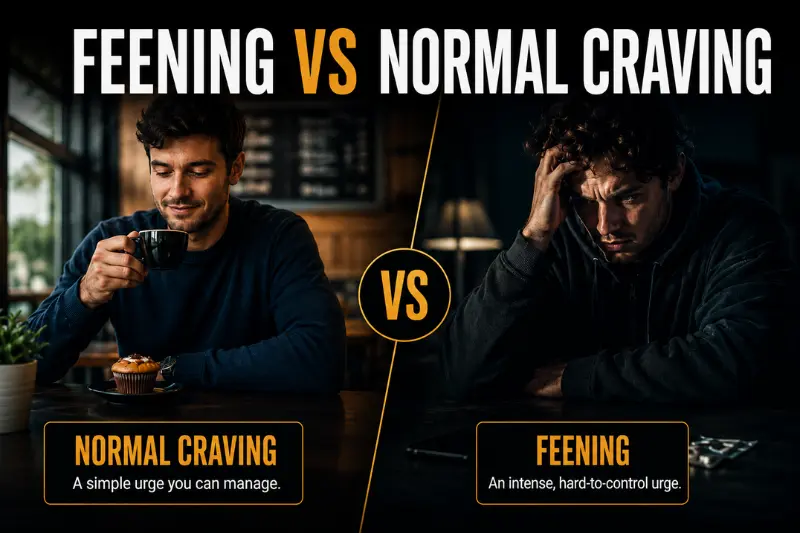
Not every craving is dangerous. Everyone craves things sometimes. You may crave chocolate, sleep, coffee, or your favorite show. The concern begins when the craving feels controlling, harmful, or difficult to resist.
| Normal Craving | Feening as a Warning Sign |
|---|---|
| You want something but can wait | You feel unable to think about anything else |
| It does not harm your life | It affects your work, school, health, or relationships |
| You can say no | You feel pushed to act even when you do not want to |
| It passes with time | It keeps coming back strongly |
| It does not cause risky behavior | It may lead to lying, hiding, stealing, or unsafe choices |
This difference matters because the feening meaning can be harmless in slang but serious in addiction-related situations.
Common Signs Someone May Be Feening
The signs can vary depending on the person and the substance involved. Still, some common signs may include physical, emotional, and behavioral changes.
Physical Signs
A person dealing with intense cravings may show signs such as:
- Restlessness
- Sweating
- Shaking or trembling
- Nausea
- Headaches
- Trouble sleeping
- Changes in appetite
- Fast heartbeat
- Low energy
These symptoms do not automatically prove addiction, but they can be warning signs when they appear with strong cravings or withdrawal.
Emotional Signs
Emotional signs may include:
- Irritability
- Anxiety
- Mood swings
- Frustration
- Panic
- Sadness
- Feeling overwhelmed
- Anger without a clear reason
When someone is feening, emotions can feel harder to manage because the brain and body are focused on getting relief.
Behavioral Signs
Behavioral signs may include:
- Constantly talking about using
- Trying to find a substance
- Leaving suddenly or secretly
- Avoiding family or friends
- Ignoring responsibilities
- Spending money impulsively
- Taking risks
- Lying about where they are going
- Returning to old habits or old contacts
If these signs continue, the person may need support, not shame.
Why Do People Feen for Something?
People may feen for something because of habit, emotion, environment, or changes in the brain’s reward system.
Here are common reasons:
1. Triggers
Triggers are people, places, feelings, memories, or situations that remind someone of a substance or behavior.
Examples include:
- Seeing an old friend connected to substance use
- Passing a familiar bar or location
- Feeling stressed after work
- Listening to a song linked to past use
- Attending a party
Triggers can make cravings feel sudden and powerful.
2. Stress and Emotions
Many people crave something when they feel stressed, lonely, angry, bored, anxious, or sad. In these moments, the brain may look for quick comfort.
This is why some people say they are feening for food, alcohol, nicotine, or attention when they are emotionally drained.
3. Withdrawal
Withdrawal can happen when the body has adapted to a substance and then the person reduces or stops using it. This can create strong physical and mental discomfort.
Withdrawal-related cravings may feel more intense than normal cravings. In some cases, withdrawal can be dangerous and needs medical support.
4. Habit Loops
A habit loop forms when the brain connects a cue with a behavior and a reward.
For example:
- Stress → drink alcohol → feel relaxed
- Boredom → smoke → feel stimulated
- Loneliness → text someone repeatedly → feel noticed
Over time, the brain starts expecting that same action whenever the cue appears.
5. Social Pressure
Friends, parties, social media, music, and environment can increase cravings. If someone spends time around people who use a substance, the urge may become harder to manage.
Is Feening a Bad Word?
“Feening” is not always a bad word, but it can sound negative depending on context.
In casual conversation, it may sound playful:
- “I’m feening for tacos.”
- “I’m feening for a vacation.”
But when used to describe a person, it can sound insulting or judgmental:
- “He’s a feen.”
- “She’s acting like a fiend.”
Because the word can carry stigma, it is better to use respectful language when talking about addiction. Instead of calling someone a “fiend,” say:
- “A person experiencing cravings”
- “A person struggling with substance use”
- “Someone dealing with addiction”
- “Someone who may need support”
This small change makes the conversation more human and less shameful.
What to Do If You Are Feening for Something
If you are feening for something harmless, like food or entertainment, taking a break, eating properly, or distracting yourself may help.
But if you are feening for drugs, alcohol, nicotine, or another harmful behavior, take the craving seriously.
Here are safe steps that may help:
Pause for 10 to 20 Minutes
Cravings often rise and fall like a wave. Try to delay acting on the urge. Set a timer and focus on getting through the next few minutes.
Change Your Environment
Move away from the place, person, or situation that is increasing the craving. Go outside, sit near someone supportive, or enter a safer space.
Use a Distraction
Try something simple and active:
- Walk
- Shower
- Clean your room
- Listen to calming audio
- Call someone
- Play a game
- Write down what you feel
The goal is not to pretend the craving does not exist. The goal is to stop it from controlling your next action.
Name the Trigger
Ask yourself:
- What started this craving?
- Am I stressed, lonely, tired, angry, or bored?
- Did I see something that reminded me of using?
- What do I actually need right now?
Naming the trigger gives you more control.
Talk to Someone Safe
Call or message someone who will not judge you. This could be a trusted friend, family member, counselor, sponsor, or support group member.
You can say:
“I’m having a strong craving right now. Can you stay with me for a few minutes?”
Simple honesty can interrupt the urge before it grows.
feening vs normal craving what is the difference
If someone you care about is feening, your response matters. Shame, anger, and insults usually make the situation worse.
Try these steps:
- Stay calm.
- Speak with respect.
- Ask what they need right now.
- Help them move away from triggers.
- Encourage them to contact a professional or support person.
- Do not give them money for substances.
- Do not ignore threats of self-harm or overdose.
- Call emergency services if there is immediate danger.
You can say:
“I can see this craving feels really strong. I’m not here to judge you. Let’s get through the next few minutes safely.”
Support does not mean enabling. You can care about someone while still setting boundaries.
When Feening May Be a Warning Sign
Feening may be a warning sign if the craving:
- Feels impossible to control
- Leads to risky choices
- Causes repeated relapse
- Affects work, school, or family life
- Causes lying or secrecy
- Comes with withdrawal symptoms
- Makes the person feel hopeless
- Leads to thoughts of self-harm
If cravings feel dangerous or unmanageable, professional help is important. A doctor, therapist, addiction counselor, or treatment service can help create a safer plan.
If someone may overdose, become violent, lose consciousness, or harm themselves, treat it as an emergency.
Better Words to Use Instead of “Feening”
Because “feening” can sound harsh in serious situations, you may want to use clearer and kinder words.
Better options include:
- Craving
- Strong urge
- Intense desire
- Withdrawal craving
- Substance craving
- Compulsive urge
- Drug-seeking urge
- Alcohol craving
- Emotional craving
For example, instead of saying:
“He is feening like crazy.”
You can say:
“He is experiencing strong cravings and may need support.”
This sounds more respectful and more accurate.
Feening Meaning: Common Examples
Here are simple examples that show how the word changes by context.
Casual Example
“I’m feening for coffee.”
Meaning: The person really wants coffee.
Food Example
“She’s feening for fries.”
Meaning: She is craving fries badly.
Social Media Example
“He’s feening for likes.”
Meaning: He strongly wants attention or validation.
Relationship Example
“She’s feening for his reply.”
Meaning: She is waiting eagerly or anxiously for his message.
Addiction Context Example
“He’s feening for drugs.”
Meaning: He may be experiencing intense substance cravings.
These examples show why context is important. The feening meaning is not the same in every sentence.
Conclusion
The feening meaning is simple at first: it means strongly craving or wanting something. But the full meaning depends on context.
In slang, feening can describe a craving for food, coffee, attention, love, or entertainment. In text messages, it can mean someone is eager, attached, or emotionally focused on something. In addiction-related situations, feening can describe intense cravings for drugs or alcohol that may need real support.
The best way to understand the word is to look at how it is used. If it sounds casual, it may simply mean “I really want this.” If it involves substances, withdrawal, risky choices, or loss of control, it may be a serious warning sign.
Understanding the feening meaning helps you use the word correctly, recognize when cravings may be harmful, and respond with more care when someone needs help.
FAQs About Feening Meaning
What is the simple feening meaning?
The simple feening meaning is craving or wanting something very badly. It can be casual slang or a serious word for intense substance cravings.
Does feening mean addiction?
Not always. Feening can mean a strong desire for anything. However, when it refers to drugs, alcohol, or repeated harmful behavior, it may be connected to addiction or dependence.
Is feening the same as fiending?
Yes, they are closely related. “Fiending” is the more traditional spelling, while “feening” is a common slang spelling. Both can mean craving something intensely.
What does feening mean in text?
In text, feening usually means someone really wants something or someone. It can be playful, romantic, dramatic, or serious depending on the message.
What does feening for someone mean?
Feening for someone means strongly wanting their attention, affection, presence, or reply. It can suggest attraction, obsession, or emotional attachment.
Is feening a bad thing?
It depends on context. Feening for food or music is usually harmless. Feening for drugs, alcohol, or unhealthy attention can be a warning sign.
What should I do if I am feening for drugs or alcohol?
Move away from triggers, delay the urge, contact someone safe, and seek professional support if the craving feels hard to control. If there is immediate danger, call emergency services.
Why do people say “stop feening”?
People say “stop feening” when someone seems desperate, obsessed, or overly eager. It is often used casually, but it can sound rude depending on tone.
YOU MAY ALSO LIKE:
Sunshine Meaning in Love: The True Emotional Meaning Explained
Happy Eve Meaning – What It Really Means and How to Use It
Orange Meaning in Love – What This Warm Color Really Says About Romance


