Most people see yellow mucus and immediately assume the worst. Infection. Antibiotics. A doctor’s visit. In reality, yellow snot is your immune system doing exactly what it is supposed to do. But shade matters, timing matters, and context matters. This guide breaks down every possible Meanings of yellow snot so you can stop guessing and start knowing.
Quick Answer: Yellow snot is caused by white blood cells (neutrophils) releasing pigmented enzymes as they fight off a virus, bacteria, allergen, or irritant. In most cases lasting under 10 days, it does not require antibiotics or a doctor visit.
Table of Contents
What Is Yellow Snot, and Why Does Mucus Turn Yellow?
Your body produces roughly one to two liters of mucus every day. Under normal conditions, nasal mucus is clear, thin, and largely invisible. It is made up of water, glycoproteins, antibodies, and dissolved salts. Its primary job is to trap pathogens, allergens, and airborne particles before they reach your lungs.
When your immune system detects a threat, it triggers a cascade of responses inside the nasal passages. White blood cells called neutrophils flood the area to destroy the invading pathogen. As these cells do their job and break down, they release granules containing an iron-rich enzyme called myeloperoxidase. This enzyme, along with the debris of dead immune cells, is precisely what gives mucus its yellow color.
The core answer: yellow snot is visible evidence that your immune system is actively engaged. It is not a disease in itself. However, the exact shade, how long it lasts, and what accompanies it all shift its meaning significantly.
7 Real Causes of Yellow Snot (From Most to Least Common)
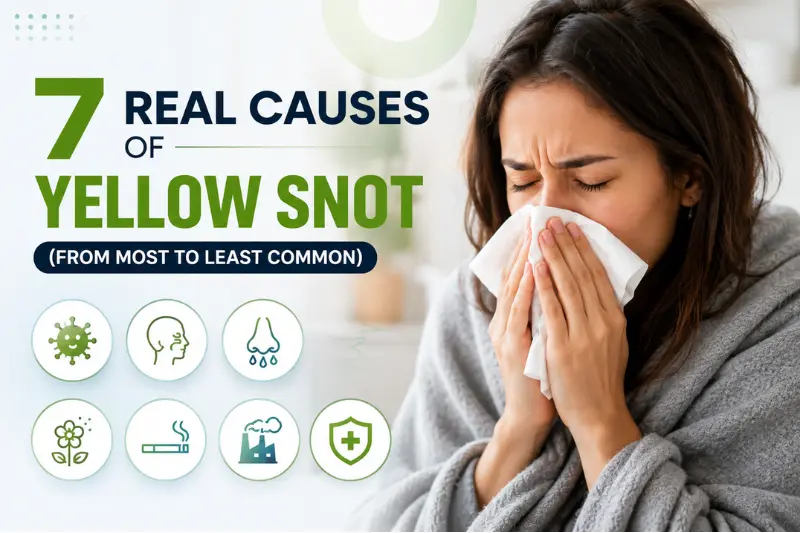
1. Viral Upper Respiratory Infections
The most frequent cause of yellow nasal discharge is a viral infection. When a rhinovirus or influenza virus enters your nasal passages, mucus production accelerates to flush it out, and as white blood cells accumulate and break down, clear mucus shifts to white and then yellow. This color change typically happens between days 2 and 5 of a cold. It is a normal, expected part of the infection cycle.
2. Bacterial Sinusitis
If yellow nasal discharge persists beyond 10 days, intensifies after initial improvement, or arrives with significant facial pressure and fever, a bacterial sinus infection may be the cause. Bacteria colonize trapped mucus inside blocked sinus cavities, producing thicker, darker yellow or yellow-green discharge. Duration and symptom pattern, not mucus color alone, are the determining factors.
3. Seasonal and Environmental Allergies
Allergic rhinitis can produce yellow-tinged mucus when the inflammatory response recruits enough white blood cells. Allergy-related yellow snot is usually thinner and more watery than infection-related discharge, and accompanies classic allergy symptoms including itchy eyes, sneezing, and a runny nose.
4. Structural Obstructions
A deviated septum or nasal polyps can chronically impair sinus drainage. Mucus that cannot drain properly becomes stagnant, concentrates, and turns yellow as bacteria of the normal nasal flora multiply within it.
5. Environmental Irritants
Cigarette smoke, industrial fumes, wildfire smoke, and heavy dust chronically inflame the nasal lining, often producing excess mucus tinged yellow or amber, particularly in long-term smokers.
6. Dehydration
When your body is dehydrated, mucus loses water content and becomes denser, which can make normally clear mucus appear pale yellow. Increasing fluid intake typically resolves it within 24 to 48 hours.
7. COVID-19 and Post-Viral Sinus Inflammation
COVID-19 can cause yellow nasal discharge during acute infection and in the weeks following recovery. Some people develop secondary bacterial sinusitis after COVID. If yellow snot continues well beyond your acute illness, a medical evaluation is recommended.
YOU MAY ALSO LIKE:
The Hidden Meaning of Feening Beyond Simple Slang
Finlay Meaning – The Complete Guide to This Timeless Scottish Name
Cosmetic Chemists – The Scientists Behind Your Favourite Beauty
What Each Shade of Yellow Snot Actually Means
Color alone cannot diagnose an infection. But shade carries meaningful information about where you are in an illness.
Pale or Light Yellow – What it means: Early to middle stage of a viral infection or mild immune response. This is the most common and least concerning presentation, usually clearing within 7 to 10 days.
Bright or Neon Yellow – What it means: A higher concentration of neutrophil enzymes, typically around the peak of a cold on days 3 to 5. Still generally normal, but if it persists beyond day 7 to 10 with fever and facial pain, see a doctor.
Dark Yellow or Golden – What it means: Mucus has been sitting in the sinuses longer than usual and has concentrated, suggesting impaired drainage. This shade is more likely to warrant medical attention, especially with facial tenderness beyond 10 days.
Yellow-Green – What it means: The immune response has intensified; myeloperoxidase production has increased enough to push the color toward green. Does not automatically mean antibiotics are needed, but lasting beyond 10 to 12 days with fever and facial pain calls for a doctor visit.
Yellow Snot vs Green Snot: The Comparison People Actually Need
| Feature | Yellow Snot | Green Snot |
|---|---|---|
| Primary cause | Early-to-mid immune response | Intense or prolonged immune response |
| Infection stage | Days 1 to 5 | Days 5 to 12+ |
| Antibiotic needed? | Rarely | Not automatically |
| Typical duration | 5 to 7 days | Up to 10 to 12 days |
| Associated symptoms | Mild congestion, low/no fever | More congestion, possible facial pressure and fever |
| When to see a doctor | Beyond 10 days or severe symptoms | Beyond 10 to 12 days or fever with facial pain |
Critical point: Neither yellow nor green snot automatically means you need antibiotics. Mucus color alone cannot distinguish a viral from a bacterial infection.
Yellow Snot in Children vs Adults: Why the Rules Are Different
In Children: Immune systems still developing means children recruit white blood cells faster, so yellow discharge can appear within 2 to 3 days of a cold – this is normal. Seek pediatric evaluation if discharge lasts beyond 10 days, fever exceeds 38.5°C (101.3°F), there’s swelling around the eyes, breathing difficulty affecting feeding, unusual lethargy, or the child is an infant under 3 months with any fever.
In Adults: The 10-day guideline applies – persistence beyond 10 days, facial pain, high fever, or a worsening pattern after initial improvement means it’s time to see a physician. Those with diabetes, immunosuppression, or chronic sinusitis history should have a lower threshold for seeking care.
Does Yellow Snot Mean You Need Antibiotics? The Answer Will Surprise Most People
Short answer: In the vast majority of cases, no.
Antibiotics work only against bacterial infections and have no effect on viruses, which cause most yellow snot cases. Taking antibiotics for a viral cold contributes to antibiotic resistance without speeding recovery. Antibiotics for sinusitis are appropriate only when symptoms persist 10+ days with no improvement, worsen significantly after initial improvement (double worsening), or are severe from the outset (high fever above 39°C with facial pain and purulent discharge together).
If you’re gradually improving each day, you almost certainly do not need antibiotics.
How to Get Rid of Yellow Snot: Evidence-Based Remedies That Actually Work
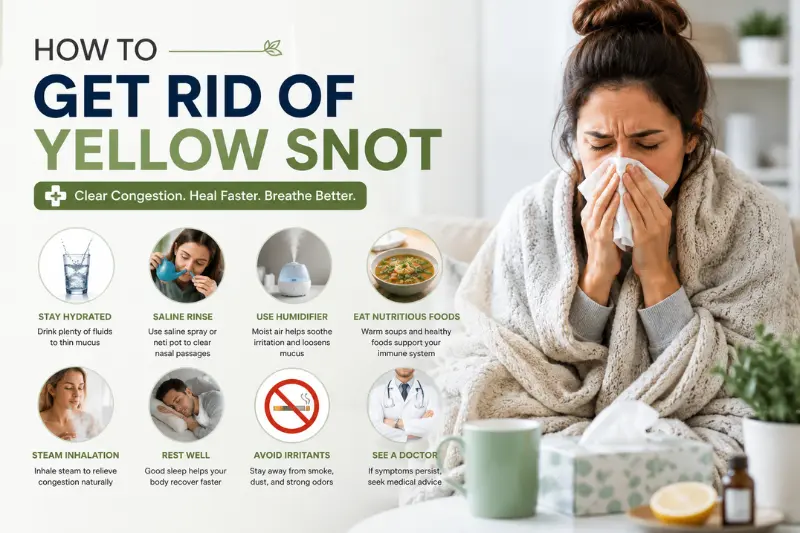
Saline Nasal Irrigation – The single most evidence-backed remedy. Mix 1 teaspoon non-iodized salt and half a teaspoon baking soda in 240ml of distilled or boiled-and-cooled water. Tilt your head sideways over a sink, pour the solution into the upper nostril, let it drain from the lower one, and repeat on the other side once or twice daily.
- Steam Inhalation – Inhale steam from a bowl of hot water under a towel for 5 to 10 minutes; adding eucalyptus oil amplifies the effect. A hot shower works similarly.
- Aggressive Hydration – Drink 8 to 10 glasses of water daily when sick; warm liquids like herbal tea and broth loosen congestion effectively.
- Humidifier Use – A cool-mist humidifier at night prevents mucus from thickening; clean the tank every 2 to 3 days.
- Elevated Head During Sleep – An extra pillow uses gravity to aid drainage and reduces morning stuffiness.
- Warm Facial Compress – 10 to 15 minutes over the nose and cheeks relaxes sinus tissue and thins mucus.
- Anti-Inflammatory Foods – Capsaicin (chili), ginger, turmeric, garlic, and chicken soup all have genuine supporting evidence.
Over-the-Counter Options: saline sprays (unlimited use), decongestants (oxymetazoline max 3 days to avoid rebound congestion), antihistamines for allergy-driven cases, guaifenesin to thin mucus, and ibuprofen or paracetamol for fever and pain.
Prescription Treatment: If bacterial sinusitis is suspected, a doctor may prescribe amoxicillin-clavulanate (first-line antibiotic), intranasal corticosteroids, or refer you to an ENT for structural or recurrent issues.
When to See a Doctor: A Complete Symptom Severity Checklist
| Category | Symptoms | Action |
|---|---|---|
| Safe to monitor at home | Under 10 days, improving daily, mild/no fever, no facial pain | Continue home care |
| See a doctor soon | Beyond 10 days, double worsening, fever above 38.5°C, facial pain, pregnancy, infant under 3 months | Appointment within 24 to 48 hours |
| Seek urgent care now | Fever above 39°C, severe headache, eye swelling or vision changes, stiff neck, confusion, discharge after head injury | Emergency care immediately |
Yellow Snot in Specific Situations People Search For
- Morning Only: Mucus concentrates overnight since you’re not actively draining it; this is common and benign if it clears through the day.
- With No Other Symptoms: Often the tail end of a mild cold, allergies, or dehydration. Beyond two weeks with no explanation, get checked.
- During Pregnancy: Pregnancy rhinitis (affecting up to 20% of pregnant women) causes nasal swelling from hormonal changes. Use saline rinses and humidifiers first, since many decongestants are contraindicated; fever or facial pain needs prompt review.
- After COVID-19: Lingering nasal inflammation or secondary bacterial sinusitis can occur post-COVID. Persistent yellow discharge beyond your acute illness warrants medical review.
Allergies vs Cold:
| Sign | Allergies | Cold or Infection |
|---|---|---|
| Onset | Gradual, seasonal | Sudden |
| Texture | Thin, watery, light yellow | Thicker, darker yellow |
| Fever | Never | Common |
| Eye symptoms | Itchy, watery | Usually unaffected |
| Duration | Weeks to months | 7 to 10 days |
| Antihistamine response | Significant improvement | Little effect |
How to Stop Yellow Snot From Coming Back
Wash hands frequently, stay hydrated, manage allergies proactively, quit smoking and avoid pollutants, run a humidifier in dry months, see an ENT for recurring sinusitis, and support immunity through sleep, exercise, and adequate vitamin C and D.
Frequently Asked Questions
Does yellow snot always mean a bacterial infection?
No. It’s most commonly viral and resolves without antibiotics within 7 to 10 days.
How long is yellow snot normal?
Up to 10 days during a cold. Beyond that without improvement, see a doctor.
Is yellow snot contagious?
The mucus isn’t, but the underlying infection may be.
Do I need antibiotics for yellow snot?
In most cases, no – only if symptoms persist beyond 10 days or meet bacterial sinusitis criteria.
What does yellow snot only in the morning mean?
Overnight mucus concentration; common and typically benign if it clears by day.Can allergies cause yellow snot?
Can allergies cause yellow snot?
Yes, but it’s lighter and thinner than infection-related yellow snot, and responds to antihistamines.
What does bright neon yellow snot mean?
A vigorous immune response, typically around day 3 to 5 of a cold – still usually normal.
When does yellow snot become a sinus infection?
When it lasts beyond 10 days, worsens after improving, or comes with fever and facial pain.
What should I eat with yellow snot?
Warm broths, chicken soup, spicy foods, ginger, turmeric, and garlic; limit alcohol and dairy if it thickens your mucus.
Difference between cold and sinusitis yellow snot?
Colds peak days 3 to 5 and improve steadily; sinusitis lasts beyond 10 days, often with facial pain and a double-worsening pattern.
The Final Word: Yellow Snot Is a Signal, Not a Sentence
Yellow snot is your immune system’s calling card, visible proof your body has mobilized its defenses. In most cases lasting under 10 days, it needs nothing more than rest, hydration, saline rinsing, and time. What matters is shade, duration, trajectory, and accompanying symptoms – not the color alone. When in doubt, consult a physician, especially if pregnant, immunocompromised, or managing a child under three months.
Your nose is giving you information. Now you know how to read it accurately.
Medical References
Rosenfeld RM et al., Clinical Practice Guideline: Adult Sinusitis, Otolaryngology Head and Neck Surgery, 2015. Chow AW et al., IDSA Clinical Practice Guideline for Acute Bacterial Rhinosinusitis, Clinical Infectious Diseases, 2012. Taverner D, Latte J., Nasal decongestants for the common cold, Cochrane Database of Systematic Reviews, 2007. Pynnonen MA et al., Nasal saline for chronic sinonasal symptoms, Archives of Otolaryngology Head and Neck Surgery, 2007. Eccles R., Understanding the symptoms of the common cold and influenza, The Lancet Infectious Diseases, 2005.
YOU MAY ALSO LIKE:
Why Does a Dilemma Secretly Sabotage Your Decision-Making?
FCI HRMS: Login, Payslip, Leave, ERS Portal, App & Employee Services