BAMS Full Form
Bachelor of Ayurvedic Medicine and Surgery
BAMS full form is Bachelor of Ayurvedic Medicine and Surgery. It is a professional undergraduate medical degree focused on Ayurveda, the traditional Indian system of medicine.
Meaning of BAMS
BAMS is a course for students who want to study Ayurvedic medicine and become Ayurvedic doctors. It combines traditional healing methods, herbal treatment, diagnosis, and patient care with basic modern medical knowledge.
What is BAMS Full Form?
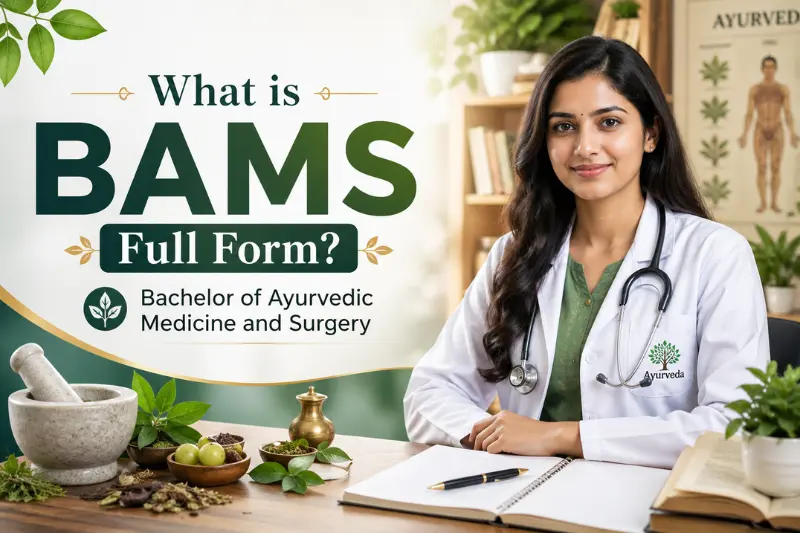
BAMS full form is Bachelor of Ayurvedic Medicine and Surgery. It is a professional undergraduate medical degree focused on Ayurveda, the traditional Indian system of medicine.
BAMS teaches students how to understand diseases, diagnose patients, and provide treatment using Ayurvedic principles, herbal medicines, diet, lifestyle guidance, and preventive healthcare methods.
In simple words, BAMS trains students to become Ayurvedic doctors who use natural and holistic treatment methods to improve a patient’s health.
Table of Contents
What is BAMS?
BAMS is an undergraduate medical course for students who want to build a career in Ayurveda and natural healthcare.
This course combines:
- Traditional Ayurvedic knowledge
- Basic modern medical science
- Herbal medicine and treatment methods
- Practical clinical training
- Patient care and diagnosis
Students learn how the human body works, how diseases develop, and how Ayurvedic treatments can be used to support healing and long-term wellness.
BAMS Course Duration
The total duration of the BAMS course is 5.5 years.
It includes:
- 4.5 years of academic study
- 1 year of compulsory internship
During the internship, students gain practical hospital experience and learn how to handle real patients under professional supervision. Official NCISM curriculum information lists BAMS academic phases, and official Ayurveda program rules mention a twelve-month compulsory rotatory internship.
Eligibility for BAMS
To apply for BAMS, students usually need to complete Class 12 with science subjects.
Basic eligibility includes:
- 12th passed with Physics, Chemistry, and Biology
- Minimum required marks, usually around 50% for general category students
- NEET qualification for admission
- Eligibility rules may vary by category, state, and college
In India, NEET is required for admission to BAMS and other Indian System of Medicine undergraduate courses. NTA also states that NEET applies to BAMS, BUMS, and BSMS courses governed under the Indian System of Medicine.
BAMS Subjects: What You Study
BAMS includes both Ayurvedic and basic modern medical subjects. The syllabus is divided into different professional phases.
First Phase
Students study the basic foundation of Ayurveda and the human body, including:
- Anatomy, also called Sharir Rachana
- Physiology, also called Sharir Kriya
- Ayurvedic philosophy
- Sanskrit basics
- Basic principles of Ayurveda
Second Phase
This phase focuses more on disease understanding, medicines, and diagnosis.
Students study:
- Herbal medicine
- Pharmacology
- Toxicology
- Pathology
- Disease diagnosis
- Preventive healthcare
Third and Final Phase
The final stage includes advanced clinical subjects and practical training.
Students study:
- Internal medicine, also called Kayachikitsa
- Surgery principles, also called Shalya Tantra
- ENT and eye treatment, also called Shalakya Tantra
- Gynecology and obstetrics
- Pediatrics
- Panchakarma and clinical practice
Students also learn patient handling, clinical observation, treatment planning, and practical hospital work.
Why “Medicine and Surgery” in BAMS?
Many students get confused when they see the words Medicine and Surgery in BAMS.
In BAMS:
- Medicine refers to Ayurvedic treatments using herbs, diet, therapies, and lifestyle correction.
- Surgery refers to basic surgical knowledge taught through Ayurvedic and medical principles.
However, most BAMS doctors mainly focus on Ayurvedic consultation, herbal treatment, preventive care, wellness guidance, and non-invasive healing methods.
BAMS Course Fees
BAMS course fees depend on the type of college, state, quota, and institution.
Government colleges usually have lower fees, while private colleges and deemed universities may charge higher fees.
In India, BAMS fees can vary widely. Some government colleges may have affordable fees, while private colleges may charge much more depending on the college reputation, location, and admission category.
So instead of depending on one fixed amount, students should always check the official fee structure of the college before applying.
Career Scope After BAMS

BAMS offers many career opportunities in healthcare, Ayurveda, wellness, research, and education.
After completing BAMS, students can work as:
- Ayurvedic Doctor
- Medical Officer
- Health Consultant
- Research Assistant
- Lecturer or Professor
- Ayurvedic Pharmacist
- Wellness Consultant
- Panchakarma Specialist
BAMS graduates can also start their own Ayurvedic clinic, work in hospitals, join wellness centers, or build a career in Ayurvedic medicine manufacturing and herbal product businesses.
Salary After BAMS
Salary after BAMS depends on experience, location, skills, job role, and workplace.
A fresher may start with a basic monthly salary in a clinic, hospital, or wellness center. With experience, specialization, and patient trust, income can increase gradually.
BAMS doctors who open their own clinic or work as private consultants may earn more over time. Income can also grow through online consultation, Aurvedic product businesses, wellness programs, and private practice.
BAMS vs MBBS: Quick Comparison
| Feature | BAMS | MBBS |
|---|---|---|
| Full Form | Bachelor of Ayurvedic Medicine and Surgery | Bachelor of Medicine and Bachelor of Surgery |
| Main Focus | Ayurveda and natural healing | Modern medicine and allopathic treatment |
| Treatment Style | Herbal, natural, and holistic methods | Clinical, surgical, and allopathic methods |
| Duration | 5.5 years | 5.5 years |
| Career Path | Ayurvedic doctor, wellness consultant, researcher | Medical doctor, surgeon, specialist |
Is BAMS a Good Career?
Yes, BAMS can be a good career option for students who are genuinely interested in Ayurveda and natural healthcare.
It is suitable for students who:
- Believe in natural healing
- Want to become a doctor
- Are interested in Ayurveda
- Prefer holistic health and wellness
- Want to work in clinics, hospitals, or wellness centers
Ayurveda is becoming more popular because many people now prefer preventive healthcare, herbal treatments, and natural lifestyle solutions. This creates more opportunities for BAMS graduates in both traditional and modern healthcare settings.
Future Scope of BAMS
The future scope of BAMS is strong because Ayurveda and wellness-based healthcare are growing in demand.
BAMS graduates can build careers in:
- Ayurvedic hospitals
- Private clinics
- Wellness centers
- Research institutes
- Teaching and academics
- Ayurvedic medicine companies
- Herbal product businesses
- Online health consultation
- Panchakarma centers
With the rise of natural treatments, preventive healthcare, and wellness awareness, BAMS can offer long-term career opportunities for dedicated students.
FAQs About BAMS Full Form
What is the full form of BAMS in medicine?
BAMS full form is Bachelor of Ayurvedic Medicine and Surgery.
Can BAMS doctors open a clinic?
Yes, BAMS doctors can open and run Ayurvedic clinics after completing their degree and registration requirements.
Is NEET required for BAMS?
Yes, NEET is required for BAMS admission in recognized colleges in India. AACCC also conducts counselling for NEET-qualified candidates seeking admission to BAMS and other AYUSH undergraduate courses.
Is BAMS equal to MBBS?
No, BAMS and MBBS are different medical degrees. BAMS focuses on Ayurveda, while MBBS focuses on modern allopathic medicine.
What is the duration of BAMS?
The duration of BAMS is 5.5 years, including 4.5 years of study and 1 year of compulsory internship.
Is BAMS good for the future?
Yes, BAMS can be good for the future if you are interested in Ayurveda, natural healing, wellness, and long-term healthcare career options.
Final Thoughts
BAMS is more than just a medical degree. It is a career path for students who want to work in Ayurveda, natural healing, and holistic healthcare.
If you want to become a doctor and help people through traditional healing methods, BAMS can be a strong and rewarding career choice.
YOU MAY ALSO LIKE:
Happy Eve Meaning – What It Really Means and How to Use It
Ubiquitous Learning: Transforming Education for the Digital Age
Pure Science Courses After 12th – Your Complete Guide