

Introduction
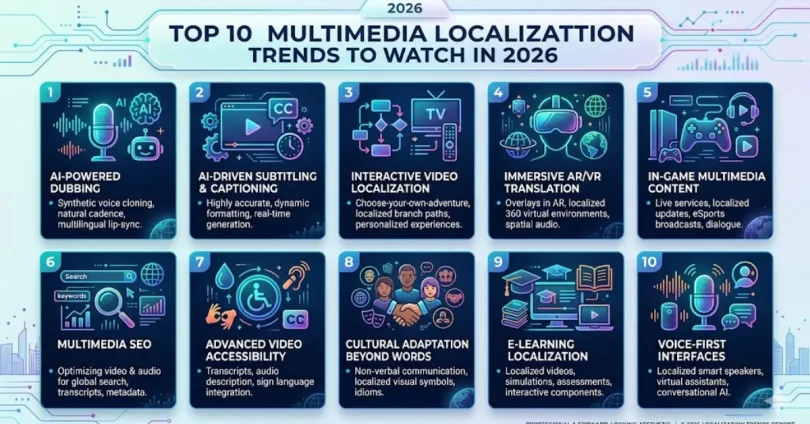
Multimedia localization is the process of adapting digital content like videos, apps, audio, and interactive media for different languages and cultures. It goes beyond simple translation by adjusting visuals, tone, voiceovers, and user experience so that the content feels natural to local audiences. Whether you call it multimedia localization or multimedia localisation, the goal remains the same: to make content resonate globally while feeling locally relevant.
As businesses expand into international markets, the demand for multimedia translation services has grown rapidly. From streaming platforms and mobile apps to Online Learning and video marketing, companies now rely on localized content to connect with users in a meaningful way.
Think about how a mobile app changes its language and layout for different regions, or how a video game adapts dialogue and cultural references for players worldwide. Even e learning platforms tailor their content to suit local audiences. This is why multimedia localization has become essential today, helping brands improve engagement, build trust, and reach a truly global audience.
What is Multimedia Localization
Multimedia Localization Definition
The multimedia localization definition refers to the process of adapting digital content such as videos, audio, apps, graphics, and interactive media for different languages, regions, and cultures. It ensures that content does not just translate words but also aligns with local preferences, cultural nuances, and user expectations.
A common confusion is the difference between translation and localization. Translation focuses only on converting text from one language to another. In contrast, multimedia localization goes much further. It adapts visuals, voiceovers, symbols, formats, and even humor so the content feels native to the target audience. In simple terms, translation changes the language, while localization transforms the entire experience.
Multimedia Localization in Software Globalization
In today’s digital world, multimedia localization plays a key role in software globalization. Apps, SaaS platforms, and digital tools are used worldwide, and they must feel intuitive to users from different regions.
For example, localization in apps involves:
- Translating interface text and buttons
- Adjusting date formats, currencies, and units
- Adapting layouts for different languages
- Ensuring visuals and colors match cultural expectations
In SaaS and UI UX design, localization goes beyond language. It focuses on how users interact with the product. A design that works in one country may not perform well in another due to cultural differences. That is why businesses invest in localization to create a seamless and user-friendly global experience.
Multimedia Localization Examples
Real-world examples make multimedia localization easier to understand:
- Streaming platforms use subtitles and dubbing to make shows accessible in multiple languages, ensuring viewers enjoy content naturally.
- Mobile apps adjust their interface, language, and even icons based on the user’s region.
- YouTube creators and brands localize videos with captions, voiceovers, and culturally relevant messaging to reach global audiences.
- E learning platforms adapt course content, visuals, and teaching styles to suit learners from different countries.
These examples show that multimedia localization is not just a technical process. It is a strategic approach that helps businesses connect with people in a more meaningful and relatable way across the world.
Why Multimedia Localization is Important in 2026

In 2026, multimedia localization is no longer optional it is a core strategy for any business aiming to grow globally. As digital content consumption continues to rise, companies must ensure their videos, apps, and interactive media are accessible and relevant to audiences across different regions.
One of the biggest reasons for this shift is the rapid expansion of the multimedia localization service market. With more users consuming content in their native language, businesses that fail to localize risk losing engagement, trust, and ultimately revenue.
Expanding Global Reach
Multimedia localization allows brands to connect with audiences beyond their home country. Instead of creating separate content from scratch, businesses can adapt existing materials for multiple markets, saving time while increasing reach.
Improving User Engagement
People are more likely to engage with content that feels familiar. When videos, apps, or courses are localized, users understand them better and stay longer. This leads to higher retention rates and stronger customer relationships.
Building Cultural Relevance
Localization ensures that content respects cultural differences. This includes adapting visuals, tone, humor, and even color choices. Without this, content can feel disconnected or even inappropriate in certain regions.
Boosting Conversions and ROI
Localized content directly impacts business results. Users are more likely to trust and purchase from brands that communicate in their language. This makes multimedia localization a powerful tool for increasing conversions and return on investment.
Supporting International SEO
From an SEO perspective, localized multimedia content helps businesses rank in different countries. By targeting region-specific keywords and languages, companies can drive organic traffic from global markets.
Industry Insight
According to insights often discussed in platforms like G2 and similar industry reports, businesses investing in multimedia localization are seeing faster global growth compared to those relying only on basic translation.
In short, multimedia localization helps businesses stay competitive in a digital-first world. It bridges the gap between global reach and local relevance, making it a key driver of success in today’s international marketplace.
Types of Multimedia Localization Services
Multimedia localization includes a variety of services designed to adapt content across different platforms, formats, and user environments. Each platform requires a slightly different approach to ensure the content feels natural and engaging for local audiences.
Below is a comprehensive table covering major multimedia platforms and their localization needs:
Multimedia Localization Services by Platform
| Platform Type | Content Type | Localization Services Included | Key Focus Area |
|---|---|---|---|
| Video Platforms | Movies, YouTube videos, ads | Subtitles, dubbing, voice-over, captions | Language + cultural tone |
| Streaming Services | Web series, OTT content | Multi-language subtitles, dubbing, UI translation | Viewer experience |
| Mobile Apps | Android, iOS apps | UI translation, layout adaptation, local formats | User experience (UX) |
| SaaS Platforms | Web apps, dashboards | Interface localization, onboarding content, help guides | Usability + clarity |
| E-learning Platforms | Online courses, training videos | Voice-over, subtitles, content adaptation | Learning effectiveness |
| Gaming Platforms | Video games, mobile games | Character dialogue, UI, storyline localization | Immersion and engagement |
| Social Media | Instagram, TikTok, Facebook content | Captions, hashtags, video text localization | Audience reach |
| Websites | Blogs, landing pages, media content | Multimedia translation, visuals adaptation | SEO + conversions |
| Podcasts & Audio | Podcasts, audiobooks | Voice localization, transcription, translation | Audio clarity |
| Marketing Content | Ads, promotional media | Copy adaptation, visuals, video localization | Conversion optimization |
| AR/VR Content | Virtual experiences | Interface, audio, environment localization | Realistic user experience |
| Software Interfaces | Tools, enterprise software | UI/UX localization, error messages, documentation | Functionality + accessibility |
MORE USEFUL LINKS THAT YOU WILL LIKE:
Ubiquitous Learning: Transforming Education for the Digital Age
RSA Full Form South Africa – Meaning, History, and Usage
Blended Learning Solutions – A Complete Guide for Modern Training
Multimedia Localization Services Explained
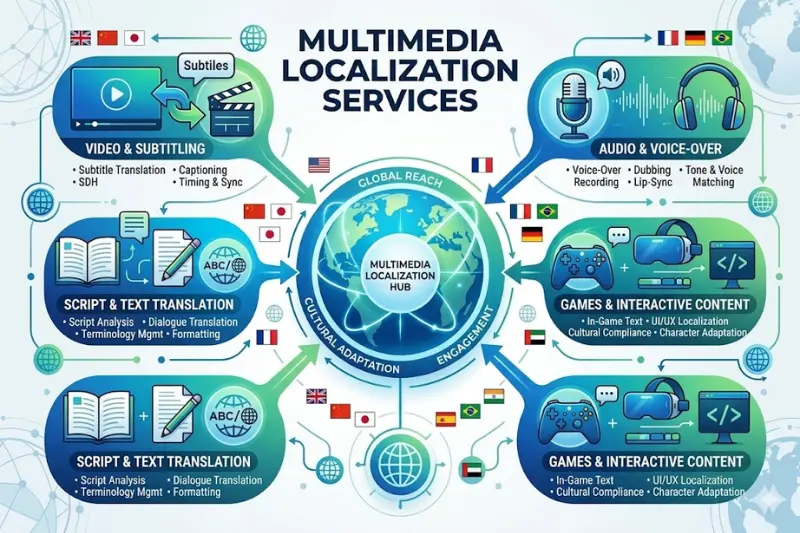
Multimedia localization services go far beyond simple translation. They provide a complete solution for adapting digital content so it performs effectively across different languages, cultures, and regions. Businesses today rely on these services to ensure their content not only communicates clearly but also connects emotionally with local audiences.
A professional multimedia localization service typically combines linguistic expertise, technical integration, and cultural understanding to deliver high-quality results.
What Does a Multimedia Localization Service Include
A complete multimedia localization service covers multiple stages to ensure accuracy and consistency across all content formats:
- Content Analysis: Experts review your multimedia content to understand language, visuals, tone, and technical requirements before starting the process.
- Translation and Cultural Adaptation: This step involves converting text into the target language while adapting idioms, tone, and cultural references to suit local audiences.
- Audio and Video Localization: Includes voice-over recording, dubbing, subtitle creation, and syncing audio with visuals for a natural experience.
- Visual and UI Adaptation: Graphics, colors, symbols, and layouts are adjusted to match cultural expectations and improve usability.
- Testing and Quality Assurance: Final content is tested for accuracy, functionality, and user experience across different devices and regions.
Multimedia Localization Solutions for Modern Businesses
Today, companies prefer integrated multimedia localization solutions that streamline the entire workflow. These solutions combine automation with human expertise to deliver faster and more consistent results.
Key features of modern solutions include:
- Cloud-based localization platforms
- AI-assisted translation with human review
- Integration with CMS, apps, and software systems
- Scalable workflows for large content volumes
These multimedia localization solutions are especially useful for businesses managing ongoing global content such as apps, e learning platforms, and marketing campaigns.
Role of Technology in Multimedia Localization
Technology has transformed how multimedia localization services operate. While human expertise remains essential, advanced tools now improve speed and efficiency.
Common technologies used include:
- Translation management systems
- AI-powered subtitle generators
- Speech recognition and voice synthesis
- Automated quality checks
However, relying only on automation can lead to cultural errors. That is why the best results come from combining technology with human localization experts.
Why Businesses Invest in Multimedia Localization Services
Companies invest in multimedia localization services because they deliver measurable business results.
Key benefits include:
- Better engagement with local audiences
- Increased trust and brand credibility
- Higher conversion rates
- Faster global expansion
- Consistent brand messaging across markets
In competitive industries, localized multimedia content can be the difference between gaining or losing international customers.
Multimedia Localization Service vs In-House Approach
Many businesses wonder whether to handle localization internally or hire professionals.
In-house localization:
- Lower upfront cost
- Limited expertise
- Slower scaling
Professional multimedia localization services:
- Access to experts and native linguists
- High-quality and culturally accurate content
- Scalable solutions for global growth
For most growing businesses, outsourcing to experienced providers offers better long-term results.
Multimedia Localization Translation Prices
Understanding multimedia localization translation prices is essential for businesses planning to expand globally. The cost is not fixed it varies depending on content type, quality level, languages, and production requirements. However, knowing industry averages helps you plan your budget more effectively.
Average Multimedia Localization Pricing (2026)
Here’s a clear breakdown of common pricing models used in the industry:
| Service Type | Pricing Model | Average Cost Range |
|---|---|---|
| Text Translation | Per word | $0.08 – $0.25 per word (VMEG AI) |
| Subtitling | Per video minute | $5 – $15 per minute (VerboLabs) |
| Voice-over | Per video minute | $20 – $50 per minute (VerboLabs) |
| Dubbing (lip-sync) | Per video minute | $50 – $150+ per minute (VerboLabs) |
| Full video localization | Per video minute | $50 – $500 per minute (VMEG AI) |
| AI-based localization | Per video minute | $1 – $10 per minute (VMEG AI) |
| Game localization | Per project/language | $2,000 – $100,000+ (transphere.com) |
What Affects Multimedia Localization Translation Prices
Pricing depends on several key factors:
1. Type of Service
Basic subtitling is the cheapest, while full dubbing with lip-sync is the most expensive due to voice actors and studio work.
2. Content Complexity
Technical, medical, or legal content costs more because it requires expert translators and additional review.
3. Language Pair
Common languages (like English to Spanish) are cheaper, while rare languages increase costs due to limited experts.
4. Video Length and Format
Most multimedia localization services charge per minute of video, making longer content more expensive overall.
5. Number of Target Languages
Each additional language multiplies the total cost, especially for voice-over and dubbing projects.
6. Turnaround Time
Urgent projects often include a 20%–50% rush fee, depending on deadlines.
Hidden Costs You Should Know
Many businesses overlook additional expenses:
- Project management fees (5–10% of total budget)
- Quality assurance and testing
- Subtitle syncing and editing
- Voice talent casting and studio recording
- Minimum project fees ($50–$200)
Cost Comparison: Traditional vs AI Localization
| Method | Cost | Quality Level | Best For |
|---|---|---|---|
| Human translation | High | Very high | Premium content, branding |
| AI + human editing | Medium | High | Scalable business content |
| Fully AI localization | Low | متوسط to good | Fast and budget-friendly projects |
AI tools are becoming popular because they can reduce costs by up to 60%, especially for large-scale content.
How to Optimize Your Localization Budget
To reduce costs without sacrificing quality:
- Use AI + human editing instead of full manual work
- Start with subtitles before dubbing
- Prioritize high-impact markets first
- Reuse translation memory tools
- Work with scalable multimedia localization solutions
Key Takeaway
Multimedia localization translation prices can range from a few dollars per minute to hundreds, depending on quality and complexity. The smartest approach is to match your budget with your business goals use cost-effective methods for scale and premium services for high-impact content.
Best Multimedia Localization Providers 2025
Choosing the right multimedia localization provider can make the difference between a polished global presence and content that misses the mark. The best providers combine linguistic expertise, technical skills, and cultural insight to deliver content that resonates worldwide.
Here are some top providers and what makes them stand out in 2025:
| Provider Name | Key Services Offered | Strengths |
|---|---|---|
| Lionbridge | Video, software, app localization, AI solutions | Global reach, enterprise expertise |
| TransPerfect | Subtitles, dubbing, e-learning, software | Industry-specific solutions, scalability |
| SDL / RWS | Translation, localization, CMS integration | Strong tech platform, seamless workflows |
| Keywords Studios | Game and media localization, QA testing | Gaming and interactive media specialization |
| Gengo | Multimedia translation services, API integration | Fast turnaround, cost-effective |
| Welocalize | Multimedia solutions, AI-assisted translation | Large enterprise focus, consistent quality |
| Venga Global | Video localization, voice-over, subtitling | Creative storytelling, multimedia expertise |
These providers are recognized for their end-to-end multimedia localization solutions, excellent customer service, and the ability to adapt to rapidly changing content trends.
When evaluating a provider, focus on:
- Experience in your industry
- Quality of native translation and voice talent
- Technology for efficient workflows
- Cultural and linguistic accuracy
- Customer support and global reach
Conclusion
In 2026, multimedia localization has become essential for businesses aiming to go global. From video content, apps, and games to e-learning platforms and software interfaces, localized multimedia content ensures that audiences worldwide feel understood, engaged, and valued.
By investing in professional multimedia localization services or solutions, businesses can:
- Reach wider audiences
- Increase engagement and conversions
- Maintain brand consistency across regions
- Optimize content for global SEO
Choosing the right provider, understanding pricing, and knowing the best practices are key steps toward successful localization. With the right strategy, multimedia localization transforms global content into a relatable and compelling experience for every audience.
Frequently Asked Questions (FAQs)
What is multimedia localization?
It is the process of adapting digital content for different languages, cultures, and regions.
How is multimedia localization different from translation?
Translation converts text, while localization adapts the entire content experience culturally and visually.
How much do multimedia localization services cost?
Prices range from $5 per minute for subtitles to $150+ per minute for full dubbing.
Which industries benefit most from multimedia localization?
E-learning, gaming, software, marketing, streaming, and mobile apps gain the most.
How do I choose the best multimedia localization provider?
Select providers with industry expertise, native talent, and proven quality solutions.
Can AI replace human localization?
AI can assist, but human expertise is essential for cultural nuance and quality control.
MORE USEFUL LINKS THAT YOU WILL LIKE:
Link Building Outsourcing: Smart Strategy for Faster SEO Growth
Agile Instructional Design: A Practical Guide for Modern Learning Teams


